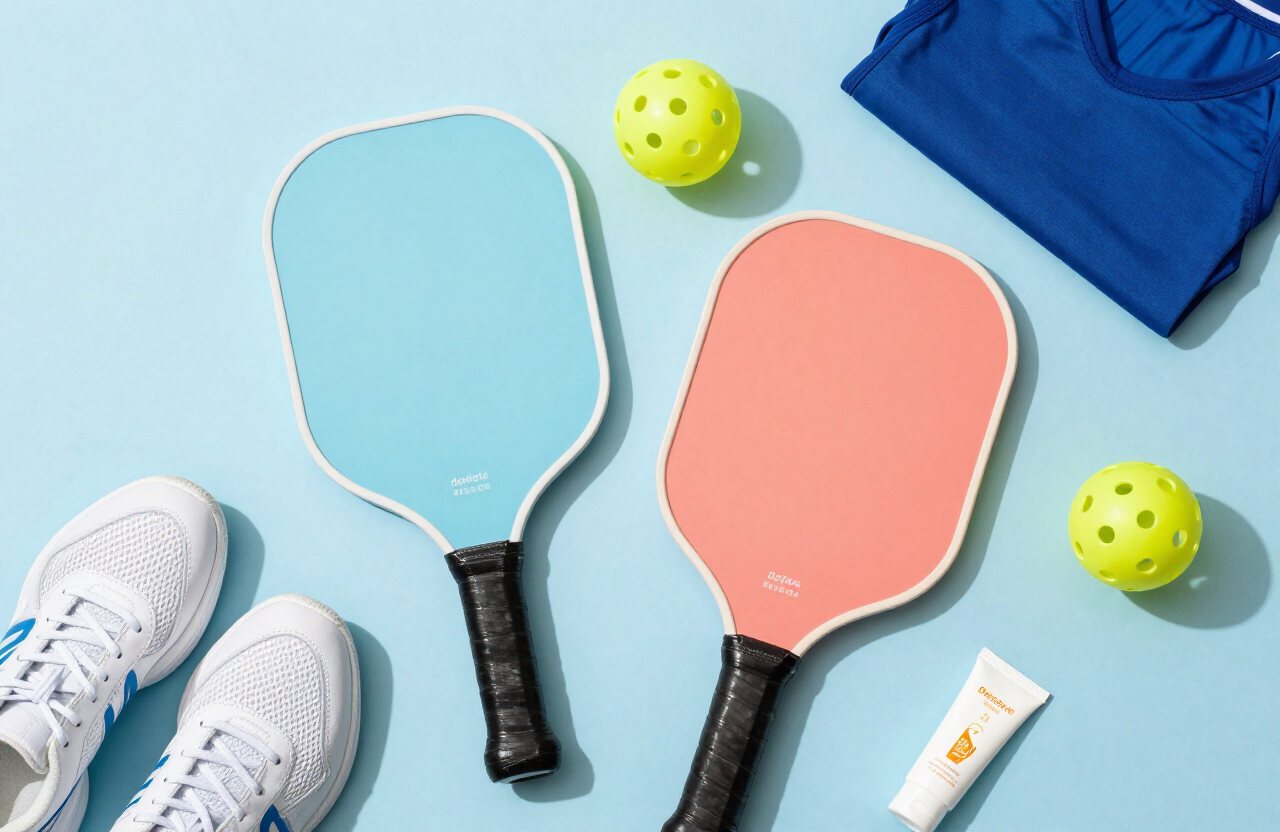
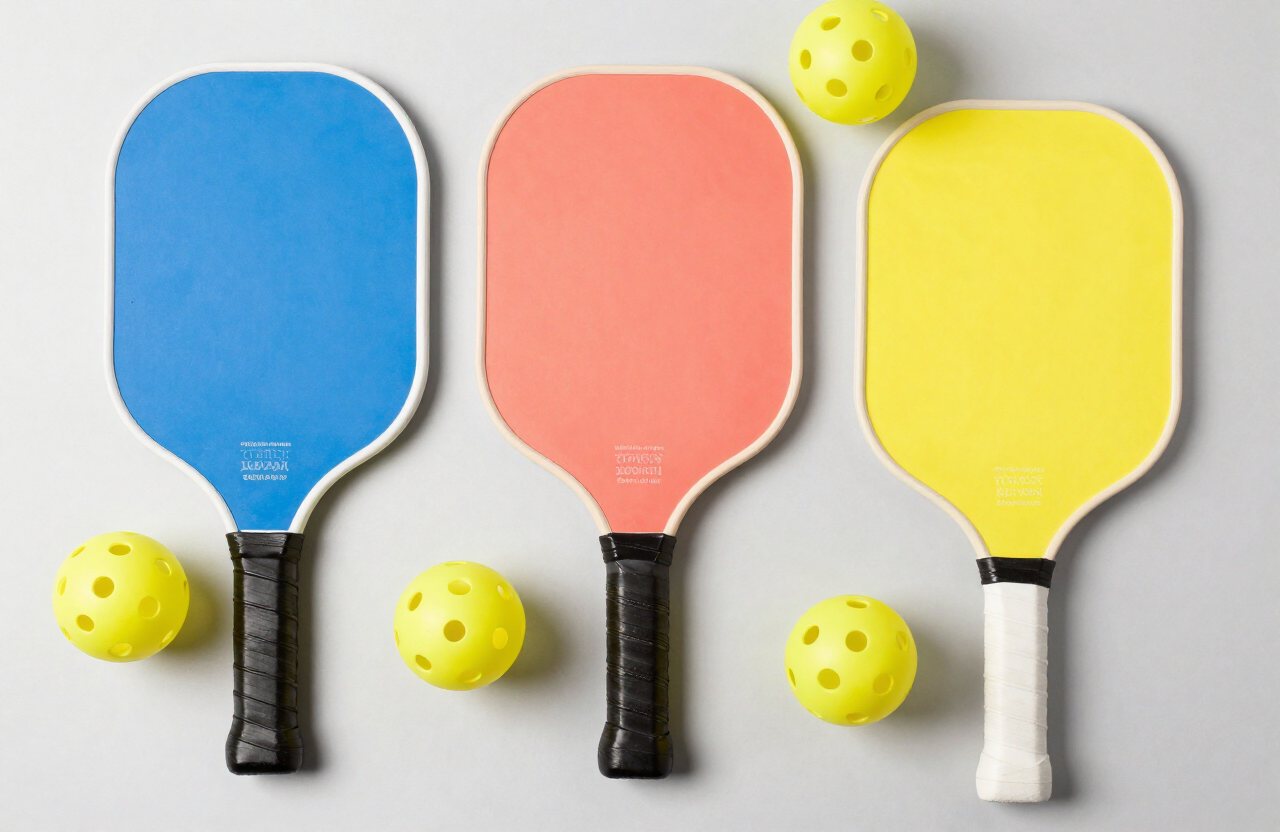
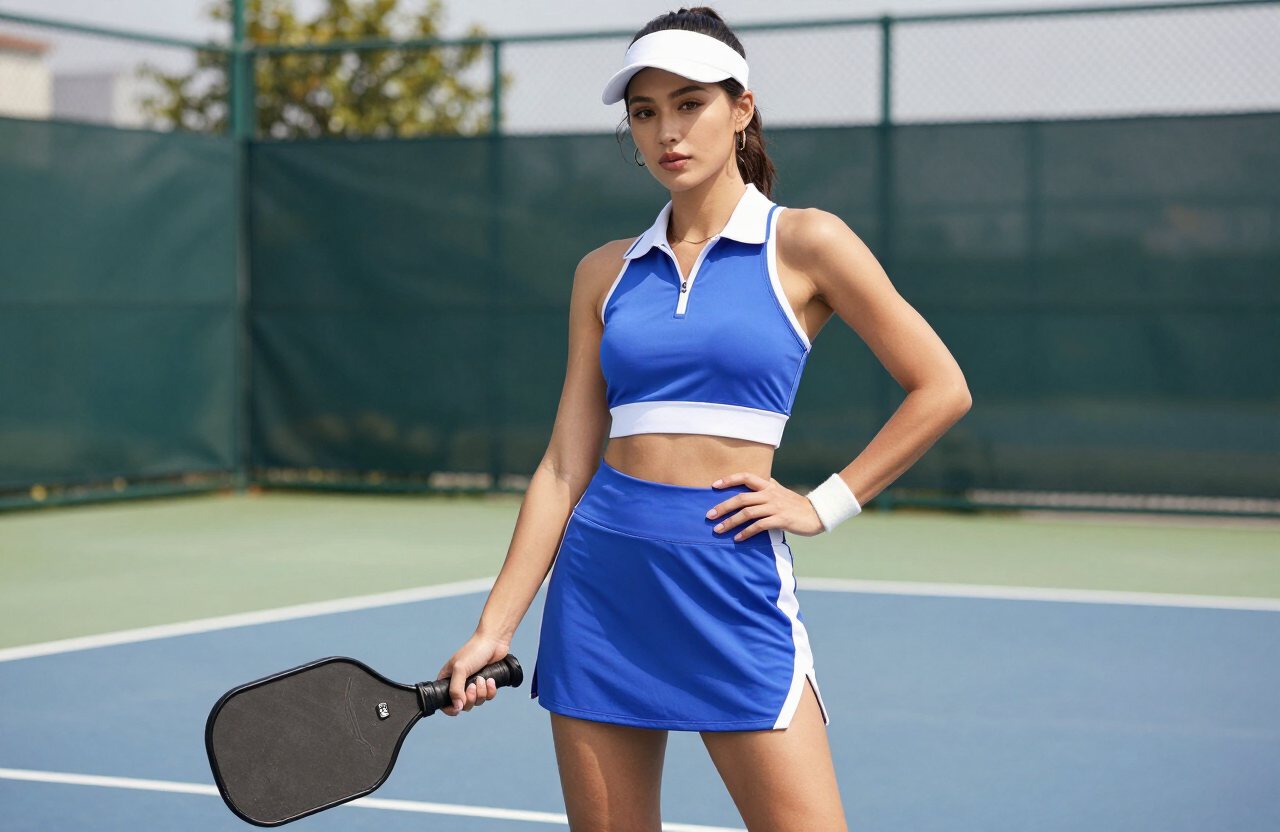
10 Pickleball Accessories That Make Playing More Comfortable
Ten pickleball accessories for park players over 50, each with who it is for and who should skip it. Overgrip, sun sleeves, eye protection and more.
SmartSelect Labs is reader-supported. If you buy through a link on this page we may earn a small commission, at no extra cost to you. How we make money.
This list is for rec players whose paddle and shoes are fine. Your hands, eyes, knees or back still complain by the second hour, especially after 50. The right pickleball accessories fix those small, repeated annoyances for very little money. We left paddles, shoes and water bottles off the list because each has its own guide. Every item also gets a who-should-skip-it line.
Tourna Grip overgrip
Dry, tacky feel for sweaty hands and sore elbows.
Check price at AmazonTifosi sport sunglasses
Shatter-resistant lenses that wrap the eye.
Check price at TifosiWhat matters when choosing pickleball accessories
Each item here solves one problem. So the first question is which problem you have. Sweaty or stiff hands point to an overgrip. A red neck after morning doubles points to a hat with a flap and a pair of sleeves. A back that hurts after picking up fifty balls points to a tube or a chair.
The eyes deserve their own paragraph. A 2025 study in JAMA Ophthalmology counted about 1,262 pickleball eye injuries treated in U.S. emergency rooms in 2024. Across the study, roughly 70 percent of cases were in people 50 or older. The American Academy of Ophthalmology recommends eyewear that meets the ASTM F3134 standard for racket sports. Regular eyeglasses do not count. Source: the Review of Optometry summary.
Braces are the one category where more is not better. An elbow strap or a knee sleeve can help a specific, diagnosed ache. It cannot fix a paddle that is too heavy or a grip that is too tight. It should not become a reason to play through pain, either. If a joint hurts for more than two weeks, swells, or changes your swing, see a physical therapist first.
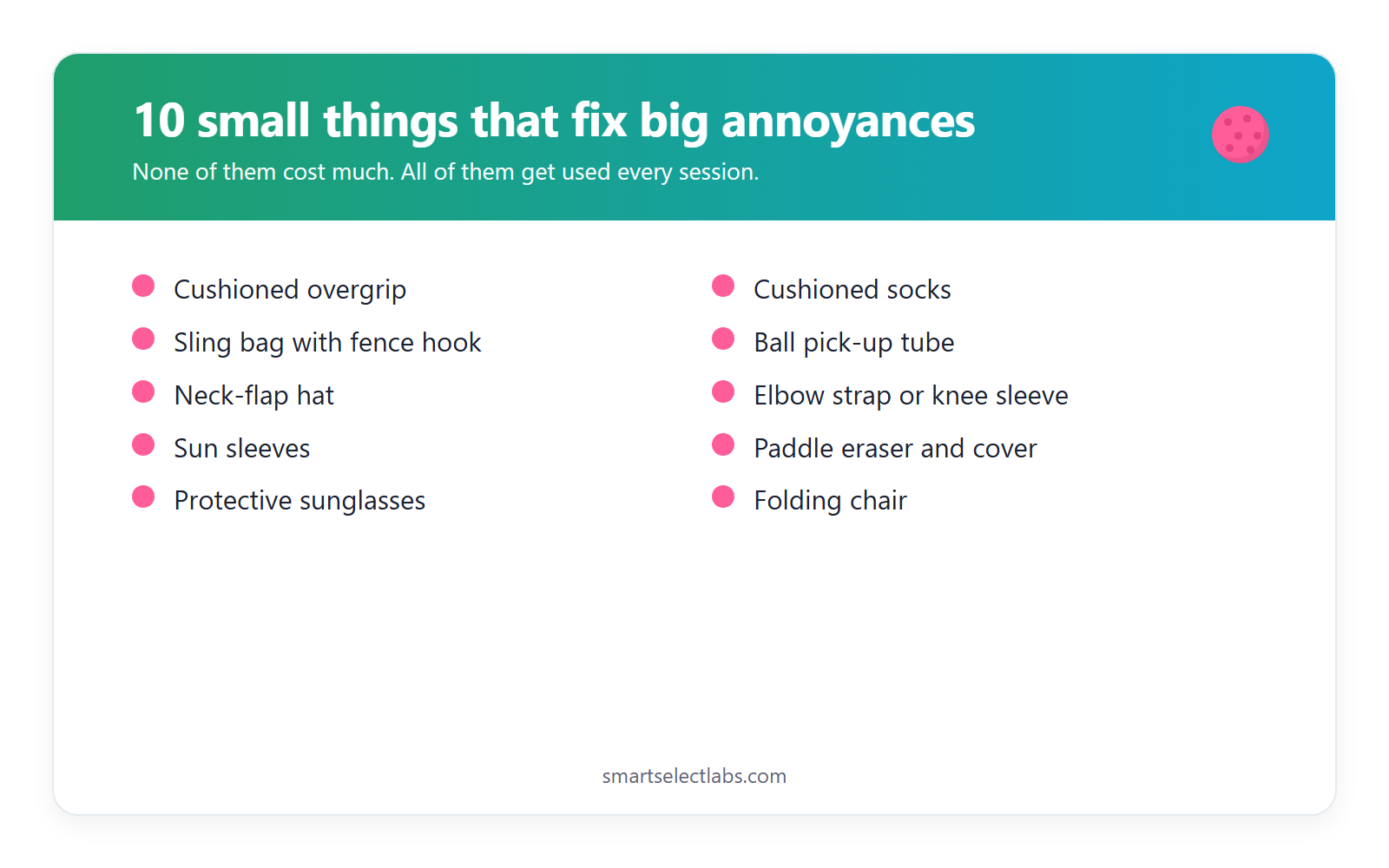
The ten pickleball accessories, one by one
Here they are side by side first.
| Accessory | Fixes | Best for | Amazon |
|---|---|---|---|
| Cushioned overgrip | Slipping, stinging handle | Sweaty hands, arthritis | Check price |
| Sling bag with fence hook | Gear on wet ground | Walkers from the car | Check price |
| Neck-flap hat | Burned ears and neck | Midday players | Check price |
| UPF sun sleeves | Reapplying on the arms | Two-hour sessions | Check price |
| Protective sunglasses | A ball to the eye | Everyone over 50 | Check price |
| Ball pick-up tube | Bending for every ball | Backs and knees | Check price |
1. Cushioned overgrip
This is for a hand that slides on the handle by the third game. It also suits arthritic hands that find a thin, hard grip painful. A cushioned overgrip wraps over the stock grip, soaks up sweat and adds a little padding. Tourna Grip feels dry and chalky; Wilson Pro Overgrip feels tacky. Both cost a few dollars and take two minutes to wrap. One wrap adds roughly a sixteenth of an inch, so a 4.25-inch handle still fits most hands.
Buy it if
- your hand slides on the handle by game three.
- a thin, hard handle hurts an arthritic hand.
Pass if
- your grip already feels thick for your hand.
- you will not rewrap it (a worn overgrip is worse than none).
Buy a three-pack and rewrap every few weeks.
2. Sling bag with a fence hook
This is for anyone who walks from the car loaded down. A sewn-in fence hook keeps the bag off a wet court and your phone off the ground. Selkirk and Franklin both sell slings in this style. A plain one under about $30 works if the hook has stitching, not glue. Our packing checklist covers what goes inside.
Buy it if
- you walk from a parking lot and the bag ends up on the ground.
- you want a shoe pocket so court shoes stay court shoes.
Pass if
- you carry one paddle and one ball and nothing else.
- you need room for shoes and two large bottles (get a backpack).
Also sold through Amazon.
3. Neck-flap or wide-brim hat
This is for players who come home with red ears. A cap shades your face and leaves the rest bare. A hat with a neck flap, or a wide brim, in UPF 50 fabric covers the ears and the back of the neck. Those are the two spots sunscreen misses most. Our pickleball skincare guide explains the rest of the sun routine.
Buy it if
- you play outdoors between 9 a.m. and 3 p.m.
- a dermatologist has already frozen or cut a spot off you.
Pass if
- you only play indoors.
- a brim in your side vision bothers you at the net (then a cap plus sunscreen).
Check for UPF 50 in the listing.
4. UPF sun sleeves
This is for anyone who plays two hours outdoors and forgets to reapply. Sleeves rated UPF 50 block most UV without lotion. They feel cooler than bare skin once damp, and they save your forearm when you dive for a ball. Any lightweight pair in your size works; the pricey ones block no more sun.
Buy it if
- you play long outdoor sessions and forget the second coat of sunscreen.
- your forearms are the first thing to burn.
Pass if
- you play mostly in the evening or indoors.
- they slide down on you (size down before you give up).
Buy two pairs so one is clean.
5. Protective sunglasses
This is for everyone, and most of all for players over 50. That group made up about 70 percent of the eye-injury cases in the study above. A ball at the kitchen line travels fast and a paddle edge travels faster. Lens material matters more than tint. You want impact-resistant polycarbonate lenses that wrap around the eye. Polarized lenses cut court glare but add nothing for impact. Tifosi makes sport frames in this style; check the lens material and any safety rating in the listing.
Buy it if
- you play doubles at the kitchen line.
- you wear regular eyeglasses on court today (they are not impact rated).
Pass if
- you already wear prescription sports goggles.
- you expect a drugstore pair to do this job (their lenses are not rated for impact).
Also sold through Amazon.
6. Cushioned crew socks
This is for blisters, bruised heels and a shoe tongue that rubs. Cotton holds sweat and causes blisters. A synthetic or merino sock with cushion under the heel and the ball of the foot does not. Crew height keeps the shoe collar off your ankle bone. Thorlo and Feetures both make this kind of sock. For the shoe underneath, see our women’s guide. Men, your guide is here.
Buy it if
- you get blisters or sore heels after two hours.
- your shoes feel loose at the heel.
Pass if
- your shoes already fit snug (a thick sock makes it worse).
- you want a thin sock for hot days.
Try one pair before you buy six.
7. Ball pick-up tube
This is for backs and knees. A pick-up tube is a clear plastic tube with a spring or slot at the bottom. Press it over a ball and the ball pops in. A drilling session means dozens of bends, and the tube removes every one. If your bag cannot fit a two-foot tube, try a paddle-clip retriever. It grabs one ball at a time.
Buy it if
- you drill with a bucket of balls.
- bending for a ball is the worst part of your morning.
Pass if
- you play with one ball and rarely drop it.
- you have no room in the bag (get the paddle-clip retriever).
Check it fits pickleballs, not tennis balls.
8. Elbow strap or knee sleeve
This is for a specific, named ache, not general insurance. A counterforce elbow strap sits just below the elbow. It can take some load off a sore tendon on the outside of the arm. A compression knee sleeve adds warmth and a feeling of support on a stiff knee. Neither fixes the cause. A lighter paddle, a looser grip and a day off usually do more. Our paddle comparison covers the light, 16 mm options.
Buy it if
- a physical therapist or doctor suggested one for a named problem.
- your elbow pain eases when you press just below the joint.
Pass if
- you have no pain and want to prevent one (shoes and a warm-up do that).
- the pain has lasted more than two weeks or changes your swing (see a PT first).
Knee instead? Search compression knee sleeves.
9. Paddle eraser and cover
This is for a raw carbon fiber paddle face. The grit on those faces fills with ball residue after a few sessions. A rubber paddle eraser lifts it off and brings the texture back. A padded cover protects the face from the edge of a bag and the bottom of a trunk. A fiberglass paddle has no grit to restore, so a damp cloth does that job.
Buy it if
- your raw carbon face feels slick lately.
- your paddle rides in a trunk or a crowded bag.
Pass if
- your paddle face is fiberglass or smooth composite.
- you already keep the paddle in a sleeve inside your bag.
Erase lightly, never sand.
10. Folding chair
This is for busy courts with long waits and no benches. Standing for twenty minutes between games is harder on knees than playing. A low, compact chair that packs into a tube fixes it. Look for a seat high enough to stand up from without pushing off your knees. Keep it in the trunk if your courts have benches.
Buy it if
- your courts run a paddle rack and you wait for games.
- standing between games leaves your knees stiff.
Pass if
- your courts have benches or you play scheduled doubles.
- you walk a long way from the car (it stays in the trunk).
Seat height matters more than weight.
What to skip
A few pickleball accessories cost money and fix nothing. Lead tape for a first paddle. It adds weight to a paddle that is already heavy enough and makes a sore elbow worse. Bulky hinged knee braces without a diagnosis; they change how you move and hide a problem a therapist should see. Pickleball-branded towels, cooling towels and grip sprays at three times the price of the plain version. And any sunglasses sold without a lens material listed, because you cannot tell what they protect against.
How we chose
These picks rest on published specs, fit data and player feedback. We have not tested them hands-on, and we are adding our own notes as the season goes on. We favored pickleball accessories that solve one problem for a player over 50. Most cost under about $30 and come in enough sizes to fit. We kept out anything with its own guide on this site.
Frequently asked questions
What pickleball accessories should a beginner buy first?
A cushioned overgrip, because it fixes the most common complaint, a slipping or stinging handle, for a few dollars. Protective sunglasses come next if you play doubles. Add a neck-flap hat if you play outdoors in the middle of the day.
Do I need special glasses for pickleball?
Yes, if you want real protection. Regular eyeglasses and drugstore sunglasses are not rated for impact. Look for polycarbonate lenses that wrap the eye and a frame rated for racket sports. The American Academy of Ophthalmology points to the ASTM F3134 standard.
Does an overgrip change my grip size?
A little. One cushioned wrap adds roughly a sixteenth of an inch to the grip circumference. For most hands that makes a 4.25-inch handle feel better. If your grip is already on the large side, choose a thin overgrip instead.
Should I wear a knee brace or elbow strap to prevent injury?
Not as prevention. A strap or sleeve can help a named, diagnosed ache, and it can also hide a problem that needs a physical therapist. Court shoes, a warm-up and a lighter paddle prevent more injuries than any brace.
The bottom line
Once the small pickleball accessories are sorted, the bigger buys have their own guides. Start with what to pack in your pickleball bag. Then read the Selkirk vs JOOLA vs CRBN paddle comparison. The best water bottles for pickleball guide comes next. New to the game? The complete beginner’s guide starts from zero.

SmartSelect Labs is a small, family-run blog written for people who play at the park, the rec center or the community court. We explain the game in plain English and recommend gear by saying who it is for and why.